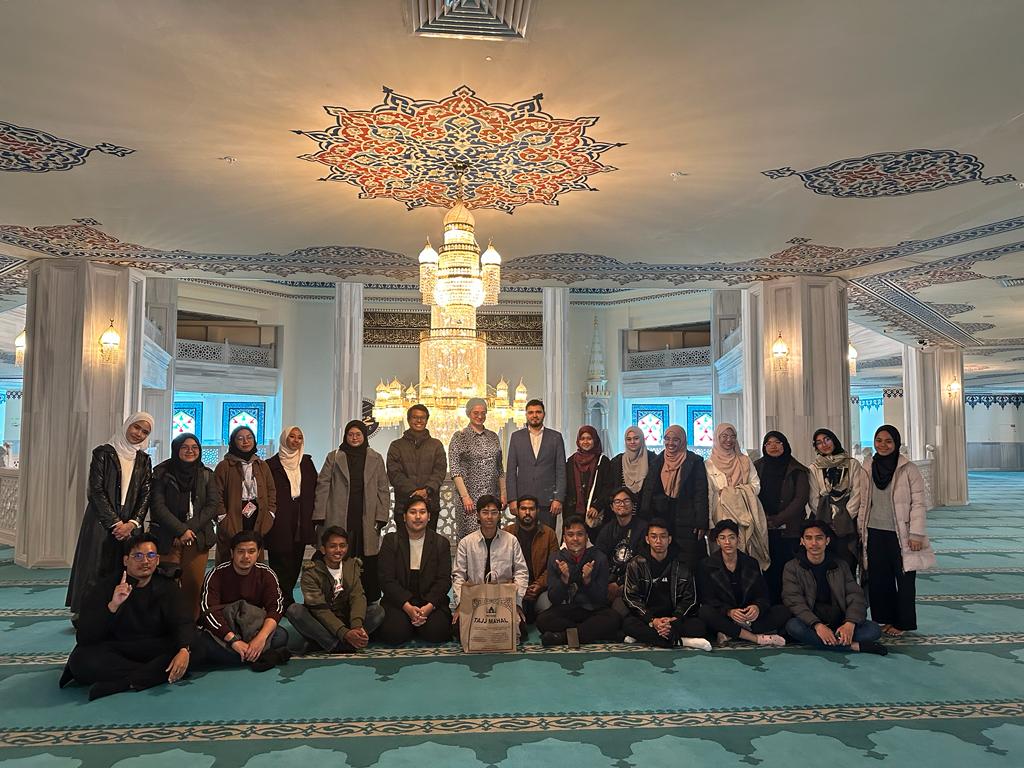
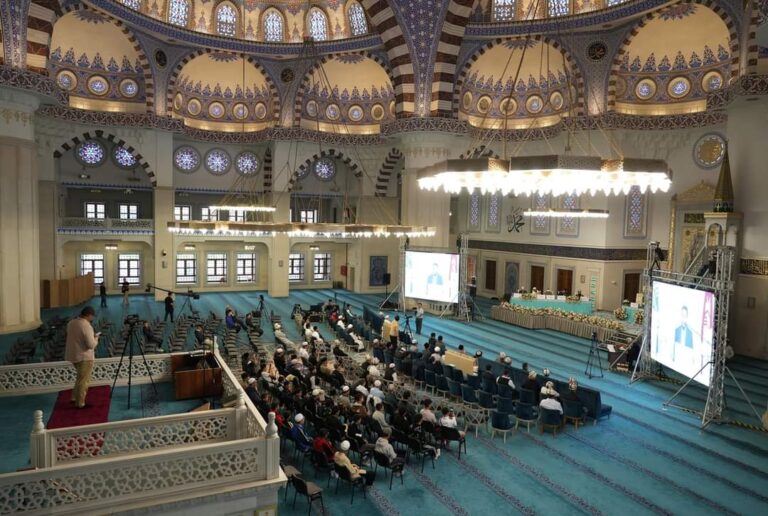
The Moscow Cathedral Mosque is the main mosque in Moscow. This is one of the oldest and most famous Muslim churches in Russia. The height of the Cathedral Mosque is 46 meters. It ranks among the tallest mosques in Europe. The dome of the Cathedral Mosque is covered with gold leaf and is clearly visible to all worshipers. The central dome is framed by two large, one small minarets and four towers. The total area of the square is 18,900 m2. And its capacity can reach 10 thousand worshipers at a time.
The first building of the Mosque was built in 1904. In 2011, it was demolished to rebuild the building according to a new, more modern design. The renovated mosque was completed in 2015.
Despite the fact that the building of the mosque is modern, it has preserved many old frescoes, wonderful historical fragments of the facade, and an element of decor in the old style. Here the old times are amazingly skillfully intertwined with new motives and trends in Muslim architecture.
The walls of the building are painted with texts from the Koran, numerous patterns. The decoration is made with special marble from Canada. Three floors of the mosque are given over to worship, the rest are occupied by a conference hall, offices, an exhibition gallery and much more.
The Mosque is illuminated by about 320 crystal chandeliers. In shape, many of them resemble temple domes. The most important chandelier is in the central hall. Its weight is one and a half tons. And it consists of 350 bulbs. 50 craftsmen from Turkey worked on its production for three months.
Cathedral Mosque of Moscow
Kazan Kul-Sharif Mosque
The main attraction of Kazan is the Kul-Sharif Mosque, located on the territory of the Kazan Kremlin.The Mosque was built for 9 years from 1996 to 2005 and is magnificent in its noble beauty. White marble walls, 4 minarets 58 meters high, a dome of 39 meters and 17 meters in diameter.
The Kul-Sharif Mosque has 5 floors. On the first one there is a prayer hall for men, the office of the imam. On the second floor there are special viewing platforms for tourists (small balconies) and a prayer area for women. The basement floor houses the Islamic Museum, wardrobes and ablutions. There is also a technical floor below.
The interior decoration of the mosque is unique. The walls, colorful ceramic panels are painted by analogy with the techniques of 400 years ago. The interior walls are decorated with hand-carved wood and stone, Roman-style mosaics, colored glass, unique stained-glass windows, gilded decor elements. In the center of the main prayer hall is a luxurious 2 ton chandelier made in the Czech Republic and luxurious floor carpets from Iran. In the evenings, Kul-Sharif is colorful and clearly visible from many districts of Kazan. 1700 worshipers can pray here at the same time.
Anyone can visit the Kul-Sharif Mosque, regardless of gender, nationality, religion. Kul-Sharif is a Juma Mosque, the main Mosque of Kazan. At the same time it is a monument of modern Islamic architecture.
Russia Kazan Kul-Sharif Mosque
Kazan Muslim Mosques
Al Marjani Mosque.
The oldest mosque in Kazan was built with public funds by permission of Catherine II.
The mosque is named after Imam Shigabutdin Marjani, who served in it from 1850-1889. Other names include Afende (Lord’s) and Yunusovskaya
The Asimov Mosque It was built in the forms of eclecticism of the national romantic trend in 1887-1890 on the site of an old wooden mosque that existed since 1804. The construction was carried out at the expense of merchant M. M. Asimov. The Asimovskaya Mosque is a one—story, two-hall jami mosque with a 51 m high minaret above the entrance. The decorative decoration uses motifs of the architecture of the Muslim East
Irek Mosque. The mosque was built in memory of the victims of the plane crash at Kazan airport in November 2013. The architecture of the “palace” resembles the image of the famous Abu Dhabi Sheikh Zayed Mosque. The size of the Irek is quite modest. But the mosque was distinguished by its elaborate decoration and rich interior decoration.
Yardyam Mosque. On July 19, 2013, a unique Yardem mosque was opened in Kazan, which has no analogues in Russia and the Near abroad. It is a whole complex, which includes a prayer hall, a hostel for nonresidents, a dining room, computer classes, a library, and a mini-printing house.
Malaysia tourists in Russia Muslim Mosque
Kazan Bolgar UNESCO Muslim heritage sight
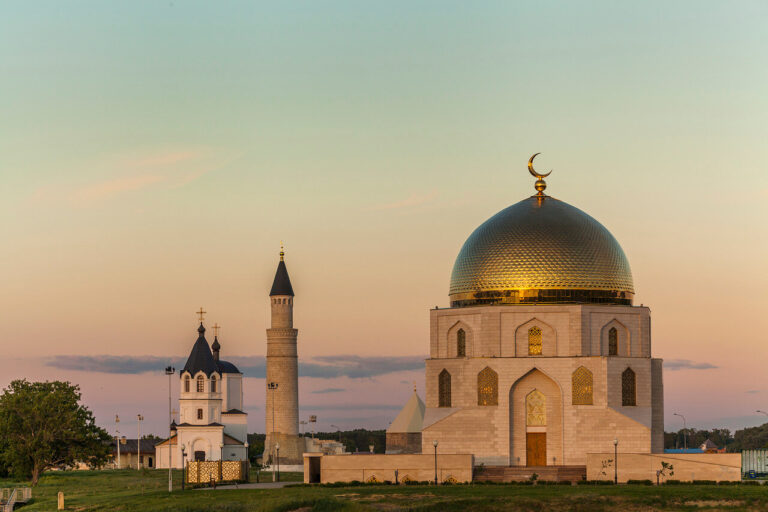
Bolgar was the capital of Volga Bulgaria – one of the early state associations of Eastern Europe. The Bolgar Historical and Architectural Complex is the northernmost monument of medieval Muslim architecture in the world, included in the UNESCO World Heritage List.
Bolgar is a holy place for the Volga Tatars. Here in 922, Islam was adopted as the official state religion.
The Cathedral Mosque and the Great Minaret – the centre of the architectural ensemble;
The Eastern Mausoleum – a Muslim burial vault • The Northern Mausoleum – a symbol of the Bulgarian settlement;
The Khan’s burial vault and the Small Minaret – sacred places of memory of ancestors;
The Black Chamber – popular memory associated its name with a beautiful legend about the Bulgarian princess; Altynchech, who threw herself from the roof of the building, refusing to marry the Golden Horde Khan;
The White Mosque – one of the most significant structures that have replenished the modern collection of architectural heritage of Tatarstan. The white decorum of the building makes the mosque resemble the Indian Taj Mahal.
Russia Kazan Bulgar Cathedral Mosque
Kazan White Mosque Bolgar
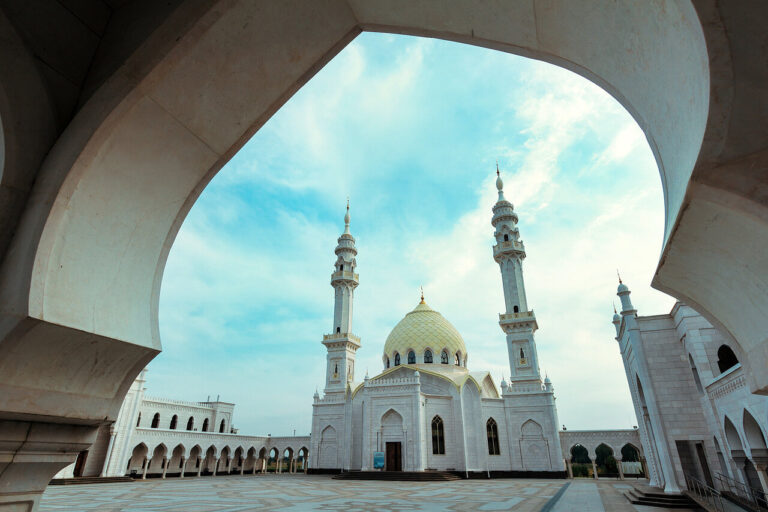
The White Mosque in Bolgar is a magnificent example of modern Islamic architecture 80 kilometers from Kazan. Trimmed with white marble (over 200 kilograms), the mosque symbolizes faith in spirituality and purity. Externally, the White Mosque in Bolgar is comparable to the famous Taj Mahalol in India and at the same time echoes the architecture of the minarets with the Medina Mosque, only slightly smaller in size.
The mosque has a main dome 17 meters high, decorated with 16 stained glass windows, two minarets. The building of the mosque was built in the form of a square. The huge internal area (musala) of 1,500 square kilometers is framed by 88 columns.
The White Mosque houses the world’s largest printed Quran. In a spread measuring 1.5 meters 2 meters. 632 pages. The Koran was made using exclusive technology by Italian masters. Despite the weight of 800 kilograms, abundant jewelry made of precious stones on the cover, its pages turn freely when reading. Here are the residences of the clergy and madrasah a Muslim religious, educational and educational institution.
The White Mosque is open to everyone. Both for believers and for those who have absolutely no connection with Islam.
Russia Kazan White Mosque Bolgar
Saint Petersburg Cathedral Mosque
It is the main Islamic Mosque of the Saint Petersburg. Opened in 1910 in advance the complex construction work was completed, only years later the Mosque appeared the citizens in all its glory. In 1940, the Mosque was closed until 1968.
The central dome of the Mosque is 39 meters long, framed by 2 minarets 48 meters high each. Internos that the dome is lined with light porcelain (not ceramics), in itself gray granite, matching the style of the Petersburg urban architecture.
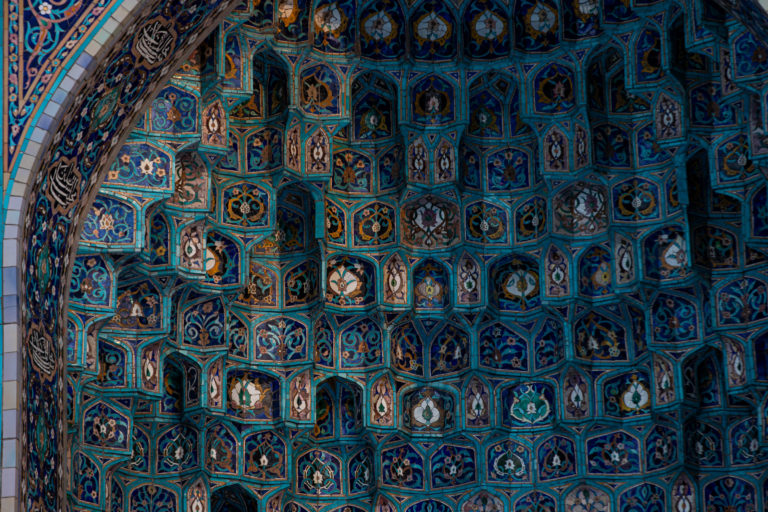
The entrance portal and dome of St.Petersburg Cathedral Mosque are decorated with blue ceramics with a turquoise tint. Medallions with a twisted Arabic painting give the Cathedral Mosque a special shade of the religious affiliation of the building. The internal backing of the chasm is torqued and at the same time light. A large chandelier in the center of the main prayer hall. The green marble columns are supporting the domed arches.
The Mosque interior has an interesting concave blue ceramic niche that guides the faithful during prayers towards Mecca. The Cathedral has traditional prayer halls: the main one is large for men on the ground floor, for women is on the second floor. There is a primary school on the third floor.